





SOUTH SOMERSET NEWS: Keep safe from ticks while out in the countryside
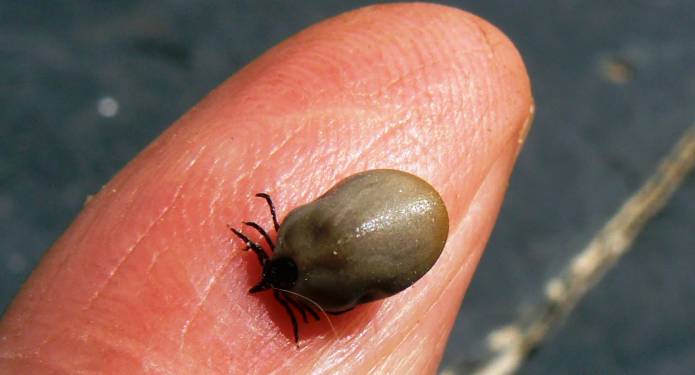
RANGERS across the South Somerset countryside sites are advising members of the public to make sure they check themselves for ticks after visiting any of the council-owned country parks and nature reserves.
Ticks are small spider like biting insects that feed on the blood of animals, including people. Ticks can survive in many places, but prefer moist areas with dense vegetation or long grass.
They are usually found in woodlands, grassland, moorland, heathland and some urban parks and gardens.
Ticks don’t jump or fly, but wait until an animal or person brushes past to climb on. They then bite to attach to the skin and start to feed on the blood. It may take several days to complete their blood meal, before they drop off. Ticks can be found throughout the year, but are most active between spring and autumn.
They can transmit bacteria that cause diseases such as Lyme disease. Symptoms of Lyme disease can include flu-like symptoms, fatigue, muscle and joint pain. A characteristic expanding rash is present in most but not all cases. You may not always remember being bitten by a tick, so if you have spent time outdoors and develop any of these symptoms, seek advice from your GP.
Lyme disease can be treated with a course of antibiotics and therefore early detection is important.
Take simple steps to avoid coming into contact with ticks, such as:
Walking on clearly defined paths, to avoid brushing against vegetation.
Avoiding dense vegetation.
Wearing light-coloured clothing so ticks are easier to spot and brush off.
You can also use repellents such as DEET.
South Somerset District Council’s leisure and culture spokesman, Cllr Sylvia Seal, said: “Our rangers work hard to cut back vegetation from paths through the various country park sites and nature reserves which can help people to avoid coming into contact with insects such as ticks.
“Try to keep to these paths if you can or certainly avoid dense vegetation. Have a quick check of any skin on your body which has been exposed during the day after you have visited our sites.”
Being tick aware by knowing what ticks look like, where they can be found, and practicing prevention behaviours will help you to avoid tick bites.
However, if you do get bitten, removing the tick quickly and correctly can help to reduce any potential risk:
Remove the tick as soon as you can.
The safest way to remove a tick is to use a pair of fine-tipped tweezers, or a tick removal tool grasp the tick as close to the skin as possible.
Pull upwards slowly and firmly, as mouthparts left in the skin can cause a local infection once removed, apply antiseptic to the bite area, or wash with soap and water and keep an eye on it for several weeks for any changes.
Contact your GP if you begin to feel unwell and remember to tell them you were bitten by a tick or have recently spent time outdoors.
You can find out information about South Somerset District Councils countryside sites at www.southsomersetcountryside.com. A range of upcoming events at the sites are listed on the homepage of the website.
Tags:
News.
Recent Posts
 ILMINSTER NEWS: Coffee morning raises an amazing amount of money!
 ILMINSTER NEWS: Actor James Purefoy to switch-on Ilminster’s Christmas lights
 Coronation of King Charles III
 RIP Queen Elizabeth II – who served the UK and Commonwealth with such distinction
 ILMINSTER NEWS: We must all keep the community spirit shining bright in Ilminster
 ILMINSTER NEWS: More 20mph speed limit signs are needed in town centre say residents
 ILMINSTER NEWS: Organ concert at The Minster will be one not to be missed
 ILMINSTER NEWS: Cash point explosion rocks Ilminster town centre
 ILMINSTER NEWS: Swanmead headteacher devastated at council’s decision
 ILMINSTER NEWS: Council makes “significant milestone” for education future
 ILMINSTER NEWS: Swanmead governors are shocked and angry over planned education changes
 COMPETITION: Sophy’s great New Year giveaway competition
 SOUTH SOMERSET NEWS: Julie remembers the Munich tragedy of the Busby Babes
 ILMINSTER NEWS: Have YOUR say NOW on controversial school changes
 ILMINSTER NEWS: Council ploughing ahead with controversial school changes